Food Sensor Application
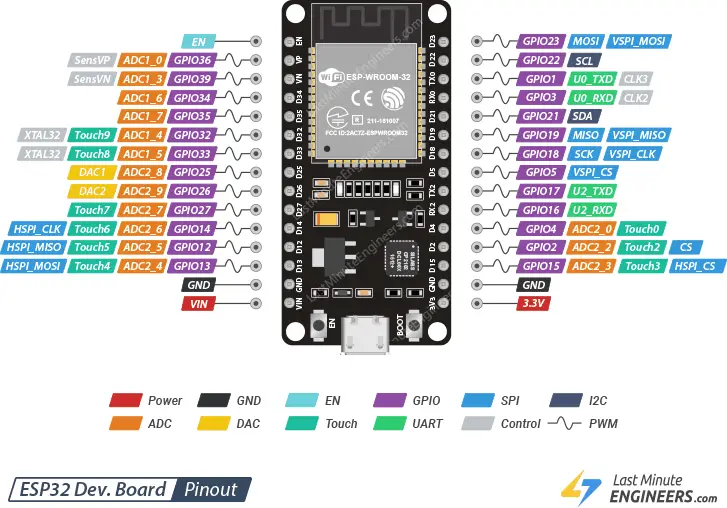
The ESP32 is a low-cost, low-power system on a chip (SoC) with integrated Wi-Fi and dual-mode Bluetooth. It is developed by Espressif Systems and is popular in IoT applications. Key features include: Dual-core or single-core variations. Clock speed: up to 240 MHz. Integrated 2.4 GHz Wi-Fi and Bluetooth. Multiple GPIO pins with various functions (ADC, DAC, UART, SPI, I2C, PWM). Sleep modes for power-saving. Built-in temperature sensor and Hall sensor.
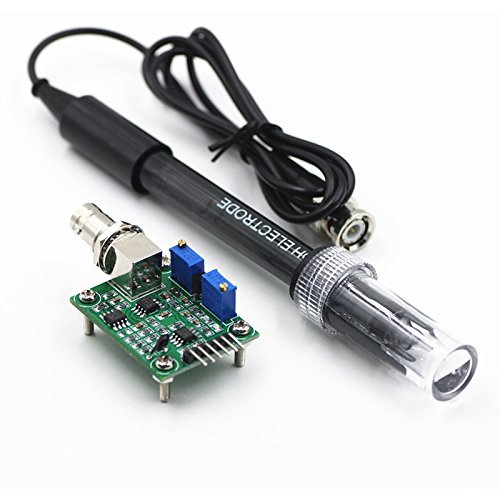
A pH sensor measures the hydrogen-ion activity in solutions, indicating its acidity or alkalinity. Key points include: Typically consists of a pH probe (glass electrode) and a reference electrode. Outputs a voltage corresponding to the pH level. Commonly used in water quality monitoring, aquariums, and industrial processes. Requires calibration with standard buffer solutions (pH 4, pH 7, pH 10).
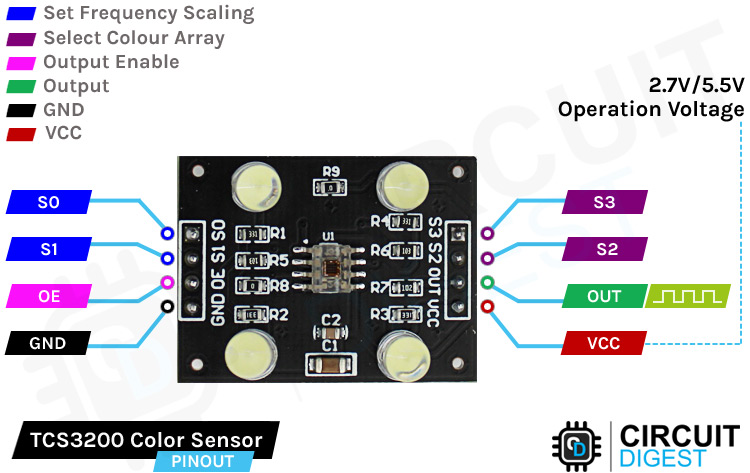
The TCS3200 is a programmable color light-to-frequency converter. It can detect and measure the intensity of red, green, blue, and white light. Key features include: 8x8 array of photodiodes (16 each for red, green, blue, and clear). Converts light intensity to frequency output. Programmable color filters. Commonly used in color detection applications and robotics.
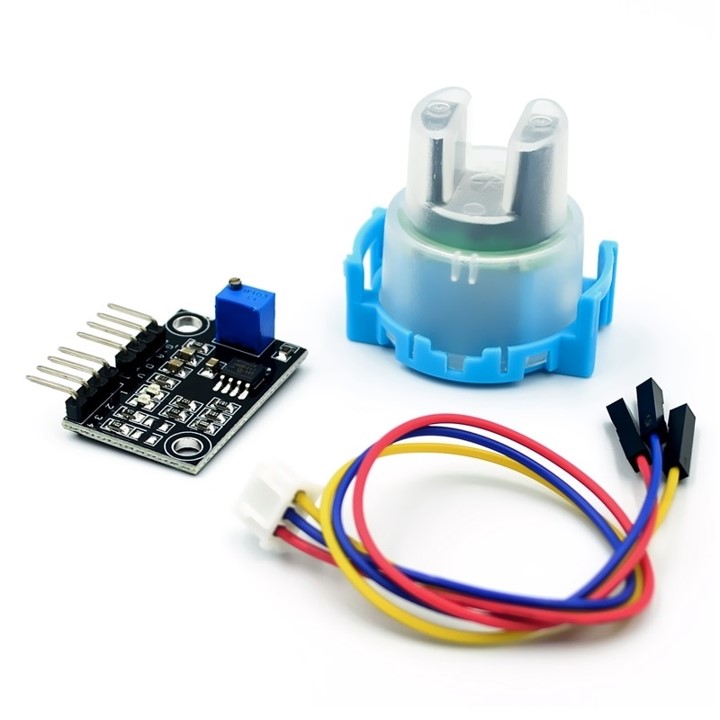
A turbidity sensor measures the cloudiness or haziness of a fluid caused by particles. It is commonly used to assess water quality. Key points include: Utilizes an optical method (light source and detector). Measures the amount of light scattered by suspended particles in the fluid. Outputs an analog voltage corresponding to turbidity. Applications include water treatment, environmental monitoring, and aquariums.
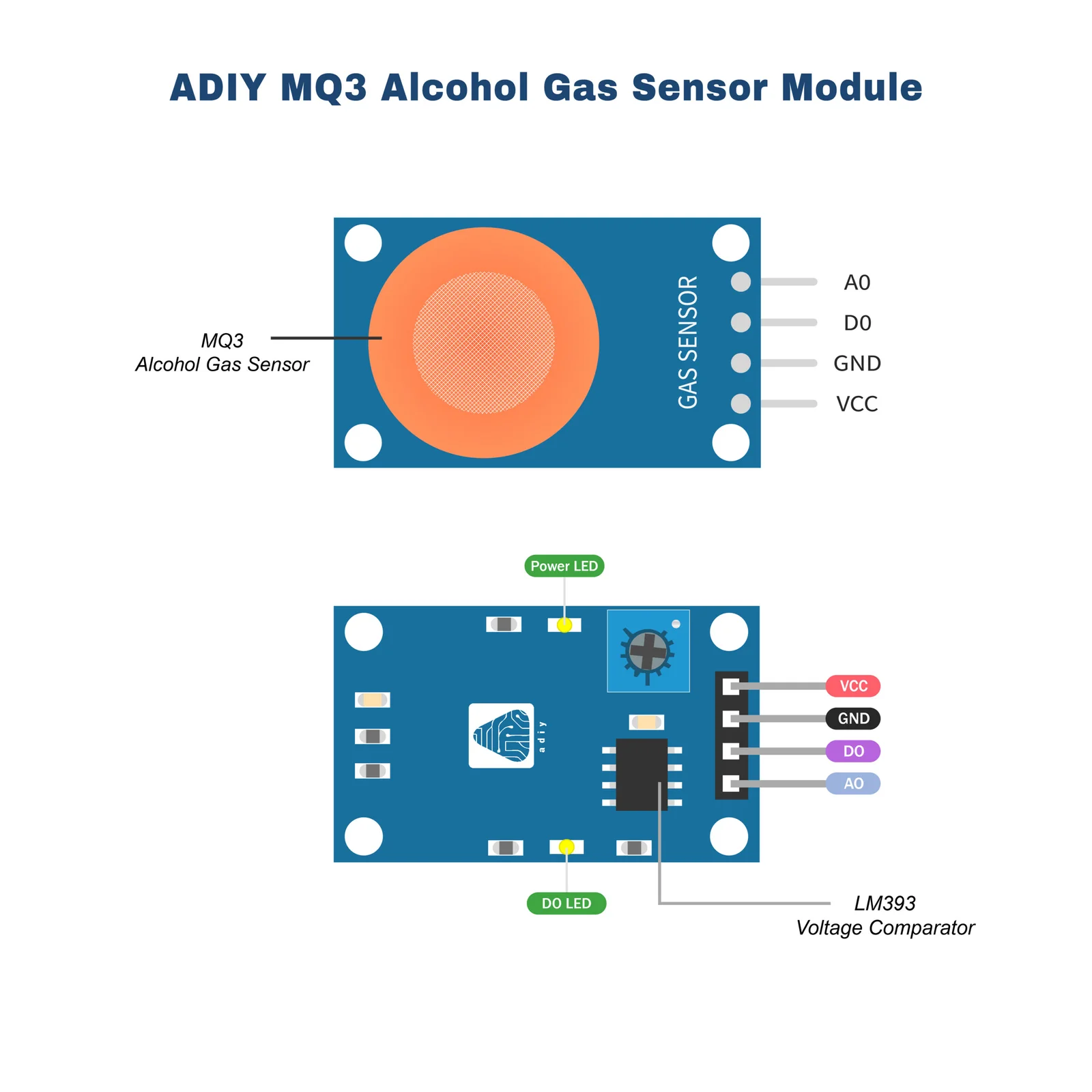
The MQ3 is a semiconductor sensor for detecting alcohol. Key features include: High sensitivity to alcohol and good resistance to disturbances. Uses a tin dioxide (SnO2) semiconductor layer. Outputs an analog signal corresponding to the concentration of alcohol. Commonly used in breathalyzers and alcohol detection systems.
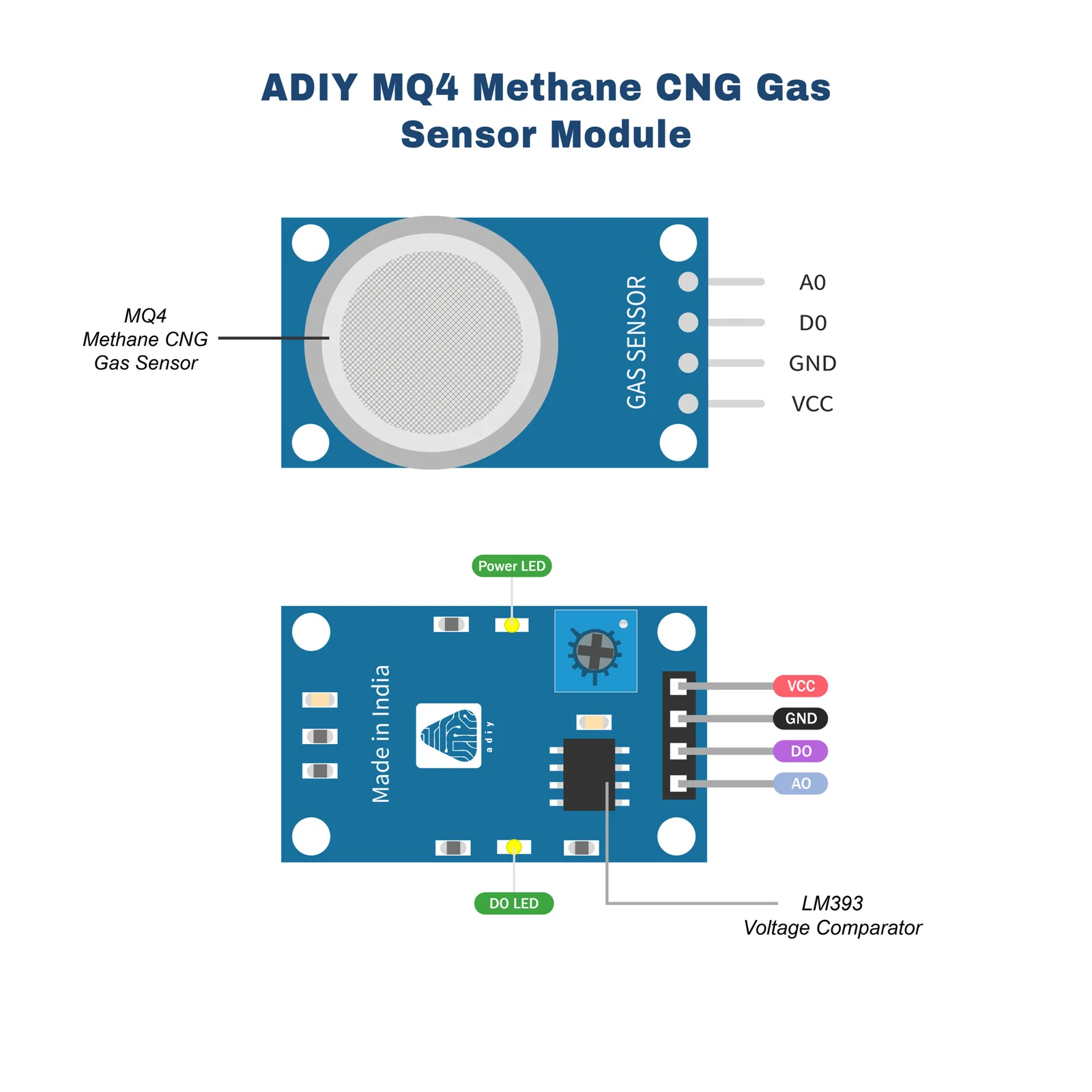
The MQ4 is a semiconductor sensor for detecting methane (CH4). Key points include: High sensitivity to methane and other natural gases. Uses a tin dioxide (SnO2) semiconductor layer. Outputs an analog signal corresponding to the concentration of methane. Commonly used in gas leakage detection systems and safety monitoring.
APPLICATION PREVIEW
| No. | Sensor Name | Sensor Value | |
|---|---|---|---|
| 1 | PH sensor | Ph Sensor Value not found | |
| 2 | Color Sensor | color sensor value not found | |
| 3 | Turbidity | Turbidity value not found | |
| 4 | Methane | Methane value not found | |
| 5 | Alcohol | Alcohol value not found | |